

CLASS A, B, AND C TRUCK DRIVING LICENSES: WHAT'S THE DIFFERENCE?
Understanding Class A, B & C Commercial Driver's Licenses
Operating certain Commercial Motor Vehicles (CMVs) requires specialized knowledge and skills beyond those required to operate a non-commercial vehicle. Depending on the type of CDL being sought, applicants must meet applicable federal and state requirements and successfully complete the required knowledge and/or skills testing.
Certain first-time CDL applicants and drivers seeking specific upgrades or endorsements are also required to complete applicable Entry-Level Driver Training (ELDT) requirements through a provider listed on the Federal Motor Carrier Safety Administration (FMCSA) Training Provider Registry before taking the applicable CDL skills test.
Commercial drivers may also be subject to applicable medical qualification and certification requirements depending on the type of commercial operation in which they engage.
Which CDL Is Right for You?
Commercial Driver's Licenses are divided into Class A, Class B and Class C based primarily on the type, configuration and weight of the commercial vehicle being operated, as well as certain passenger or hazardous-material operations.
Understanding the differences between these CDL classifications is an important first step in determining which license, endorsements and testing requirements may apply to the type of commercial vehicle you plan to operate.
Below, we'll explain the basic differences between Class A, Class B and Class C CDLs, along with examples of the vehicles and career opportunities commonly associated with each classification.
DETERMINE WHAT CDL LICENSE CLASS YOU NEED

What Types of CDLs Are There?
Before obtaining a Commercial Driver's License (CDL), it is important to determine which class of CDL is appropriate for the type of commercial motor vehicle you intend to operate.
Texas has three basic classes of Commercial Driver's Licenses: Class A, Class B and Class C.
Class A CDL
A Class A CDL permits the holder to operate any combination of vehicles with a Gross Combination Weight Rating (GCWR) of 26,001 pounds or more, provided the Gross Vehicle Weight Rating (GVWR) of the vehicle or vehicles being towed exceeds 10,001 pound and higher.
Class B CDL
A Class B CDL permits the holder to operate:
-
A single vehicle with a GVWR of 26,001 pounds or more;
-
A vehicle meeting that requirement while towing a vehicle that does not exceed 10,000 pounds GVWR; or
-
A vehicle designed to transport 24 passengers or more, including the driver.
If the CDL skills test is taken in a bus with a GVWR of less than 26,001 pounds, a restriction may apply limiting the holder to operating buses under 26,001 pounds GVWR.
Class C CDL
A Class C CDL permits the holder to operate a single vehicle or combination of vehicles that does not meet the definition of Class A or Class B when the vehicle is:
-
Designed to transport 16 to 23 passengers, including the driver; or
-
Used to transport hazardous materials requiring the vehicle to be placarded under 49 CFR Part 172, Subpart F.
-
Which CDL Do You Need?
The CDL classification you need depends on the type, weight and configuration of the vehicle you intend to operate, as well as whether you will be transporting passengers or certain hazardous materials.
Additional endorsements and/or restrictions may also apply depending on the vehicle and type of operation.
Source: Texas Department of Public Safety — Commercial Driver License Requirements.
UNDERSTANDING CLASS A, CLASS B & CLASS C CDLs
Once you have determined which Commercial Driver's License classification may apply to the type of vehicle you plan to operate, it can be helpful to understand the vehicles commonly associated with each CDL class and the endorsements that may be required.
The information below provides a general overview. CDL requirements can vary depending on vehicle configuration, weight, passenger capacity, cargo, endorsements, restrictions and the type of commercial operation.
WHAT IS A CLASS A CDL?
A Class A CDL authorizes a driver to operate a combination of vehicles with a Gross Combination Weight Rating (GCWR) of 26,001 pounds or more, provided the Gross Vehicle Weight Rating (GVWR) of the vehicle or vehicles being towed exceeds 10,000 pounds.
Vehicles commonly associated with a Class A CDL may include:
-
Tractor-trailers
-
Truck and trailer combinations
-
Flatbed combinations
-
Livestock-hauling combinations
-
Tank vehicle combinations
-
Certain other qualifying combination vehicles
The exact license, endorsements and restrictions required depend on the vehicle and type of operation.
CLASS A CDL ENDORSEMENTS
Depending on the vehicle or cargo being transported, a CDL holder may need one or more additional endorsements.
H — Hazardous Materials
Authorizes the transportation of hazardous materials requiring a hazardous-material endorsement. Additional federal requirements apply.
N — Tank Vehicle
Authorizes operation of a qualifying tank vehicle.
T — Double/Triple Trailers
Authorizes towing double or triple trailers when applicable.
X — Tank Vehicle and Hazardous Materials
Combines the Tank Vehicle (N) and Hazardous Materials (H) endorsements.
Other endorsements include:
P — Passenger
Authorizes operation of qualifying passenger vehicles.
S — School Bus
Authorizes operation of a school bus when applicable requirements are satisfied.
Additional testing and other requirements may apply before an endorsement can be added to a CDL.
CAREER OUTLOOK FOR CLASS A CDL HOLDERS
A Class A CDL can qualify a driver to pursue a variety of commercial driving opportunities, depending on experience, driving record, endorsements, employer requirements and other qualifications.
Potential career paths can include:
-
Local and regional trucking
-
Over-the-road transportation
-
Construction and heavy-haul operations
-
Flatbed transportation
-
Tanker operations
-
Agricultural and livestock transportation
-
Dedicated and private-fleet operations
-
Entertainer Tour Bus
-
Oilfield
-
Railroad
-
Tradeshow
-
Hotshot Heavy Haul
-
Oversized Loads
According to the U.S. Bureau of Labor Statistics, the median annual wage for heavy and tractor-trailer truck drivers was $57,440 in May 2024. Actual compensation varies considerably by employer, location, experience, schedule, type of freight, endorsements and other factors.
WHAT IS A CLASS B CDL?
A Class B CDL authorizes a driver to operate:
-
A single vehicle with a GVWR of 26,001 pounds or more;
-
A qualifying vehicle of 26,001 pounds or more towing a vehicle that does not exceed 10,000 pounds GVWR; or
-
A vehicle designed to transport 24 passengers or more, including the driver.
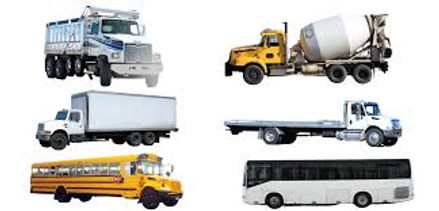
Vehicles commonly associated with a Class B CDL may include:
-
Straight trucks
-
Dump trucks
-
Large box trucks
-
Certain buses
-
School buses
-
Concrete mixer trucks
-
Refuse and sanitation trucks
-
Other qualifying heavy single-unit commercial vehicles
The particular vehicle may require additional endorsements.
CLASS B ENDORSEMENTS
Class B CDL holders may obtain applicable endorsements depending on the type of vehicle they intend to operate.
For example:
P — Passenger
May be required to operate qualifying passenger vehicles.
S — School Bus
Required for qualifying school-bus operations in conjunction with other applicable requirements.
N — Tank Vehicle
May be required when operating a qualifying tank vehicle.
H — Hazardous Materials
May be required when transporting hazardous materials requiring placarding.
The appropriate CDL class and endorsements depend on the specific vehicle and operation.
CLASS B CAREER OPPORTUNITIES
A Class B CDL can open the door to numerous commercial driving occupations. Depending on qualifications and endorsements, opportunities may include:
-
Bus driver
-
School bus driver
-
Dump truck driver
-
Concrete mixer driver
-
Delivery or box-truck driver
-
Refuse truck driver
-
Utility or municipal vehicle operator
-
Construction vehicle operator
Compensation varies considerably by occupation, employer, geographic area, experience and endorsements. For that reason, prospective drivers should research current wages for the specific occupation and area in which they intend to work.
WHAT IS A CLASS C CDL?
A Class C CDL in Texas applies to certain commercial vehicles that do not meet the definition of Class A or Class B.
A Class C CDL may be required when the vehicle is:
-
Designed to transport 16 to 23 passengers, including the driver; or
-
Used to transport hazardous materials in quantities requiring the vehicle to be placarded under applicable federal regulations.
Because Class C CDL requirements depend heavily on the vehicle's use, passenger capacity and cargo, applicants should determine the specific license and endorsement requirements that apply to the vehicle they intend to operate.
CLASS C ENDORSEMENTS
Depending on the type of operation, a Class C CDL holder may need an applicable endorsement such as:
P — Passenger
or
H — Hazardous Materials
Additional federal and state requirements may apply.
IMPORTANT: ENDORSEMENTS AND ELDT REQUIREMENTS
Some CDL applicants are subject to federal Entry-Level Driver Training (ELDT) requirements.
ELDT requirements generally apply to:
-
First-time Class A CDL applicants
-
First-time Class B CDL applicants
-
Drivers upgrading from Class B to Class A
-
First-time applicants for a Passenger (P) endorsement
-
First-time applicants for a School Bus (S) endorsement
-
First-time applicants for a Hazardous Materials (H) endorsement
Applicants should verify the requirements applicable to their particular CDL, endorsement and vehicle before testing.
Information is provided for general educational purposes. CDL classifications, endorsements, restrictions and testing requirements are established by applicable federal and Texas law and are subject to change. Applicants should verify current requirements with the Texas Department of Public Safety (DPS) and Federal Motor Carrier Safety Administration (FMCSA).
5 STEPS TO GETTING YOUR CDL IN TEXAS
Getting a Commercial Driver's License (CDL) in Texas involves several important steps. The exact requirements depend on the class of CDL, endorsements, restrictions and type of commercial driving you intend to perform.
AGE REQUIREMENTS
You must be at least 18 years old to operate a Commercial Motor Vehicle (CMV) in intrastate commerce within Texas.
Drivers must be at least 21 years old to operate a CMV in interstate commerce or engage in certain federally regulated commercial driving operations.
Additional federal and state requirements or exceptions may apply depending on the type of operation.
STEP 1 — APPLY FOR YOUR COMMERCIAL LEARNER PERMIT (CLP)
Start by determining which CDL class and endorsements are appropriate for the type of commercial vehicle you intend to operate.
Texas CDL applicants must provide the documentation required by the Texas Department of Public Safety (DPS), which may include:
-
Proof of identity
-
Proof of U.S. citizenship or lawful presence
-
Social Security Number
-
Applicable medical self-certification
-
Other documentation required by Texas DPS
Applicants must also complete the applicable CDL application and pay the required state fees.
STEP 2 — COMPLETE THE REQUIRED KNOWLEDGE TESTS
Applicants must pass the applicable Texas DPS knowledge examinations for the CDL class and endorsements being sought, as well as the required vision examination.
Depending on the type of commercial driving you intend to perform and your medical self-certification category, an applicable medical examination and Medical Examiner's Certificate may also be required.
After meeting the applicable requirements and successfully completing the required knowledge examinations, eligible applicants may receive a Commercial Learner Permit (CLP).
STEP 3 — HOLD YOUR CLP & COMPLETE APPLICABLE ELDT REQUIREMENTS
Texas requires applicable CDL applicants to hold their Commercial Learner Permit for at least 14 days before taking the CDL skills test.
Federal Entry-Level Driver Training (ELDT) requirements also apply to certain applicants, including:
-
First-time Class A CDL applicants
-
First-time Class B CDL applicants
-
Class B CDL holders upgrading to Class A
-
First-time Passenger (P) endorsement applicants
-
First-time School Bus (S) endorsement applicants
-
First-time Hazardous Materials (H) endorsement applicants
When ELDT applies, the required training must be completed through a provider listed on the FMCSA Training Provider Registry (TPR) before the applicable CDL skills test or, in the case of the Hazardous Materials endorsement, before the applicable knowledge test.
STEP 4 — TAKE THE TEXAS CDL SKILLS TEST
After satisfying the applicable CLP holding period and ELDT requirements, applicants may take the Texas CDL skills test.
The Texas CDL skills examination generally consists of three parts:
1. Vehicle Inspection (Pre-Trip)
Demonstrate the required knowledge of safety-related vehicle components and inspection procedures.
2. Basic Vehicle Control Skills
Under the Texas modernized CDL skills test, applicants complete four required basic control exercises:
-
Forward Stop
-
Straight-Line Backing
-
Forward Offset Tracking
-
Reverse Offset Tracking
3. Road Test
Demonstrate the ability to safely operate the commercial motor vehicle in actual traffic and roadway conditions.
Applicants are responsible for providing an appropriate Commercial Motor Vehicle (CMV) that meets Texas DPS requirements and represents the type of CDL or endorsement for which they are testing.
STEP 5 — PROVIDE A QUALIFYING VEHICLE FOR YOUR DPS TEST
Texas DPS does not provide the Commercial Motor Vehicle for your CDL skills test. Applicants must make arrangements to have an appropriate qualifying vehicle available for their scheduled examination.
NEED A VEHICLE FOR YOUR TEXAS DPS CDL SKILLS TEST?
Get Your CDL Quick offers commercial vehicle rental services for qualified applicants taking their Texas DPS CDL skills examination.
Available test vehicles include:
-
Class A truck and trailer combinations
-
Class B commercial vehicles
-
Passenger buses
-
School buses
Vehicle availability, qualification requirements, scheduling and rental fees apply.
Applicants should verify their individual licensing, ELDT, medical, endorsement and testing requirements with the Texas Department of Public Safety (DPS) and Federal Motor Carrier Safety Administration (FMCSA), as requirements are subject to change.
